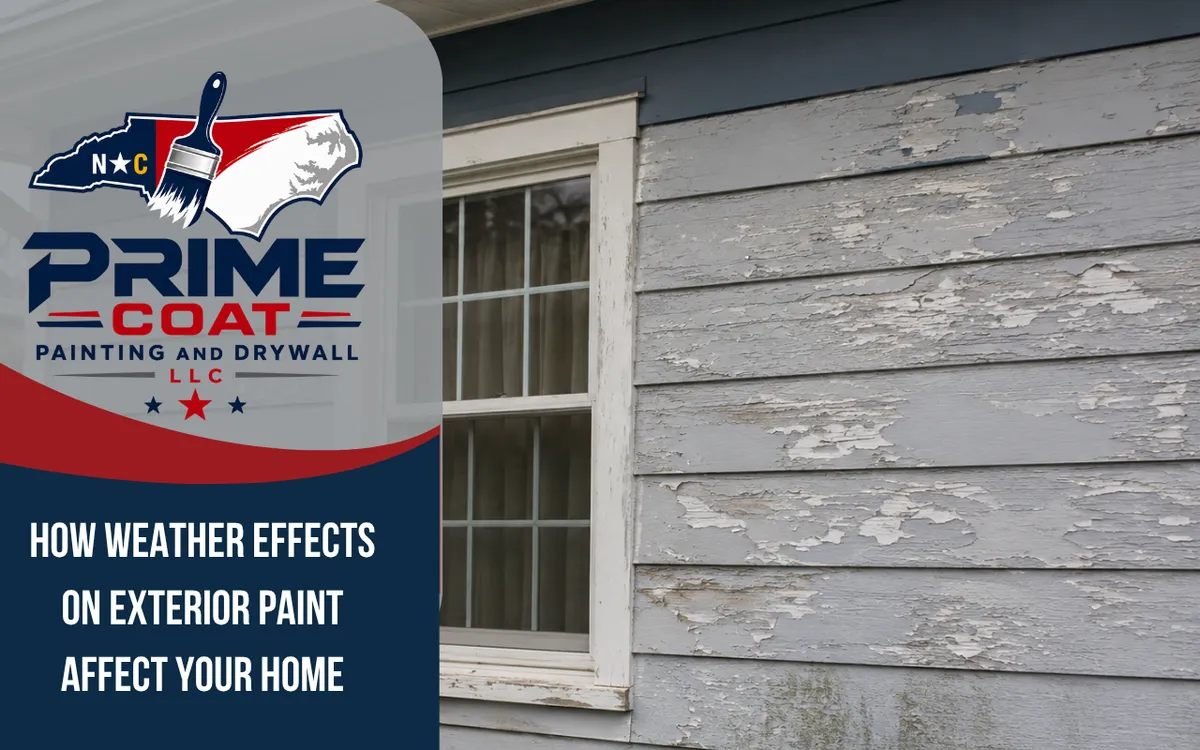
How Weather Effects on Exterior Paint Affect Your Home
Weather effects on exterior paint can change how your home looks and how well its outer surfaces stay protected. In Lake Lure, NC, strong sun, heavy rain, humidity, and cold periods can slowly weaken paint. Knowing what causes this wear makes it easier to prevent larger problems.
At Prime Coat Painting & Drywall LLC, we focus on simple steps that support a cleaner, stronger finish. With regular care, homeowners can reduce fading, cracking, and moisture problems while keeping the exterior ready for changing seasons.
Local Weather Changes Exterior Paint Surface Performance
Lake Lure weather can shift, so painted surfaces face heat, rain, wind, and cool temperatures during the year. Weather effects on exterior paint influence exterior paint durability because the coating must expand, contract, dry, and resist moisture again and again.
As a result, small signs like chalking, hairline cracks, or faded color should not be ignored. Early care can help prevent paint peeling from weather exposure and reduce the chance of water reaching wood, trim, or siding.
Sunlight Slowly Weakens Color And Exterior Surface Protection
Strong sunlight can break down paint color and make the finish look dull. Darker colors may absorb more heat, which can place extra stress on painted surfaces. Over time, this stress can make the coating more likely to crack or lose adhesion.
Check south-facing walls for early fading.
Select exterior coatings made for strong UV exposure.
Touch up worn areas before cracks become larger.
These steps can help with protecting exterior painted surfaces while supporting a more even appearance throughout the year.
Rain And Humidity Create Hidden Exterior Moisture Problems
Rain and high humidity can create moisture damage to exterior paint, especially when water sits near joints, trim, or damaged caulk. If moisture gets behind the coating, bubbling, peeling, mildew, and soft wood can develop over time.
Our team at Prime Coat Painting & Drywall LLC looks closely at surface condition before painting. A dry, clean base gives the coating a better chance to bond well and resist future moisture problems.
Temperature Swings Can Stress Painted Exterior Home Surfaces
Hot days and cooler nights make siding, wood, and trim expand and contract. Paint must move with those surfaces. When the coating becomes too brittle, small cracks can form and allow water to enter.
Use coatings designed to stay flexible.
Follow proper temperature ranges during application.
Inspect edges, corners, and joints after major weather changes.
Good preparation and suitable products can improve exterior paint durability and reduce repair work.
Cold Weather Adds Pressure Through Seasonal Freeze Thaw
When water enters tiny cracks and then freezes, it expands. This freeze-thaw cycle can push paint away from the surface and cause chips or flakes. Areas near windows, doors, roof edges, and horizontal trim often need extra attention.
Weather effects on exterior paint become more serious when moisture is already trapped below the finish. Keeping joints sealed and repairing damaged areas before winter can lower the risk of larger surface failure.
Simple Maintenance Steps Help Exterior Paint Last Longer
Exterior home maintenance in Lake Lure NC does not need to be complicated. Regular cleaning and quick repairs can make a difference, especially after storms, long wet periods, or intense summer sun.
Wash away dirt, pollen, and mildew gently.
Check caulk around windows and doors.
Repair chips before bare material stays exposed.
Watch for stains that may signal water entry.
At Prime Coat Painting & Drywall LLC, we believe steady maintenance is one of the best ways to limit weather effects on exterior paint and protect the home’s outer surfaces.
Frequently Asked Questions
How often should exterior paint be inspected?
Inspect painted surfaces at least twice a year and after severe weather. Look for fading, cracks, bubbles, loose paint, and damaged caulk. Early repairs are usually easier than waiting for larger sections to fail.
What causes paint to peel after rain?
Peeling often starts when moisture gets behind the coating or when the surface was damp before painting. Poor preparation, damaged caulk, and repeated rain can also weaken adhesion.
Can sunlight shorten exterior paint life?
Yes. Strong UV exposure can fade color and weaken the paint film over time. Choosing quality exterior products and maintaining worn areas can reduce visible damage.
Does humidity affect painted wood surfaces?
Yes. Wood can absorb moisture from humid air and rain. If that moisture cannot escape, it may lead to swelling, peeling, mildew, or soft areas.
When should peeling paint be repaired?
Repair peeling paint as soon as possible. Exposed material can absorb water, which may lead to more damage and make later repairs more involved.
Keep Your Home Exterior Ready For Changing Seasons
Weather effects on exterior paint are easier to manage when care is consistent. Clean surfaces, sound caulk, timely touch-ups, and proper products all help reduce moisture damage to exterior paint and support a longer-lasting finish.
At Prime Coat Painting & Drywall LLC, we help homeowners keep exterior surfaces prepared for Lake Lure’s changing conditions. A steady maintenance plan can protect appearance, reduce avoidable damage, and keep your home looking cared for through every season.